Ramky Group Beyond Real Estate — Infrastructure, Environment and Life Sciences

Most homebuyers evaluate a developer purely on its residential record, which misses something useful when the developer is part of a diversified...
Most homebuyers evaluate a developer purely on its residential record, which misses something useful when the developer is part of a diversified group. Ramky Group operates across four sectors, and the three that are not real estate shape both its financial resilience and the way it builds.
Infrastructure development is the founding business, dating to the group's establishment in 1994. Infrastructure work operates on different terms from residential development — public-sector clients, defined technical specifications, structured contract administration and long project cycles. A business built in that environment tends to approach construction as a systems problem rather than a styling exercise.
Environmental management services form the second sector and are less commonly found inside a property group. The relevance to a residential buyer is indirect but real: environmental compliance, water treatment and waste handling are recurring requirements in large residential developments, and a group with in-house capability in that field is better positioned on regulatory matters than one outsourcing them entirely.
Life sciences and medical research constitute the fourth sector alongside real estate. Its significance to a homebuyer is financial rather than technical. Revenue from an unrelated industry is uncorrelated with the property cycle, which means a residential downturn does not translate directly into a funding shortfall on a site under construction.
Geographic spread reinforces the same point. The group reports more than 500 project locations across 23 Indian states and union territories, with operations extending to the United States, Singapore, Saudi Arabia, the United Arab Emirates, Vietnam, China, Gabon, West Africa and Peru. Employment exceeds 40,000 and annual turnover exceeds INR 10,000 Cr.
None of this substitutes for project-level due diligence, and it should not be read as doing so. A buyer at Codename Club Class still needs the RERA registration number, the approved plans, the agreement for sale and clarity on which entity carries the obligation. What the group profile provides is context for a different question — whether the organisation behind the project has the depth to finish what it starts.
Related reading: The Ramky Group Story and Is Ramky a Trusted Builder.
Planning a visit? Enquire with our team to book a site walkthrough or request the cost sheet.
FAQs
What sectors does Ramky Group operate in?
Infrastructure development, environmental management services, residential and commercial real estate, and life sciences and medical research.Why does a diversified group matter to a homebuyer?
Revenue from unrelated industries is uncorrelated with the property cycle, so a residential downturn does not translate directly into a funding shortfall on site.How wide is the international footprint?
Operations extend to the USA, Singapore, Saudi Arabia, the UAE, Vietnam, China, Gabon, West Africa and Peru.Does group scale replace project due diligence?
No. A buyer still needs the RERA number, approved plans, the agreement for sale, and clarity on which entity carries the obligation.
Related Articles

Festive Season Home Buying in Bengaluru — Is It Really a Better Time?
Property enquiry in Bengaluru rises reliably between Navratri and the end of the calendar year. Cultural preference for auspicious timing, annual...

Rules That Shape a Bengaluru Property Purchase
Every residential purchase in Karnataka passes through a regulatory layer that shapes both cost and protection. Understanding which rules apply, and...

KIADB Aerospace Park and the Rise of the Airport Economy
Most Bengaluru housing corridors depend on a single industry, which is precisely what makes them vulnerable. The northern belt is unusual in carrying...
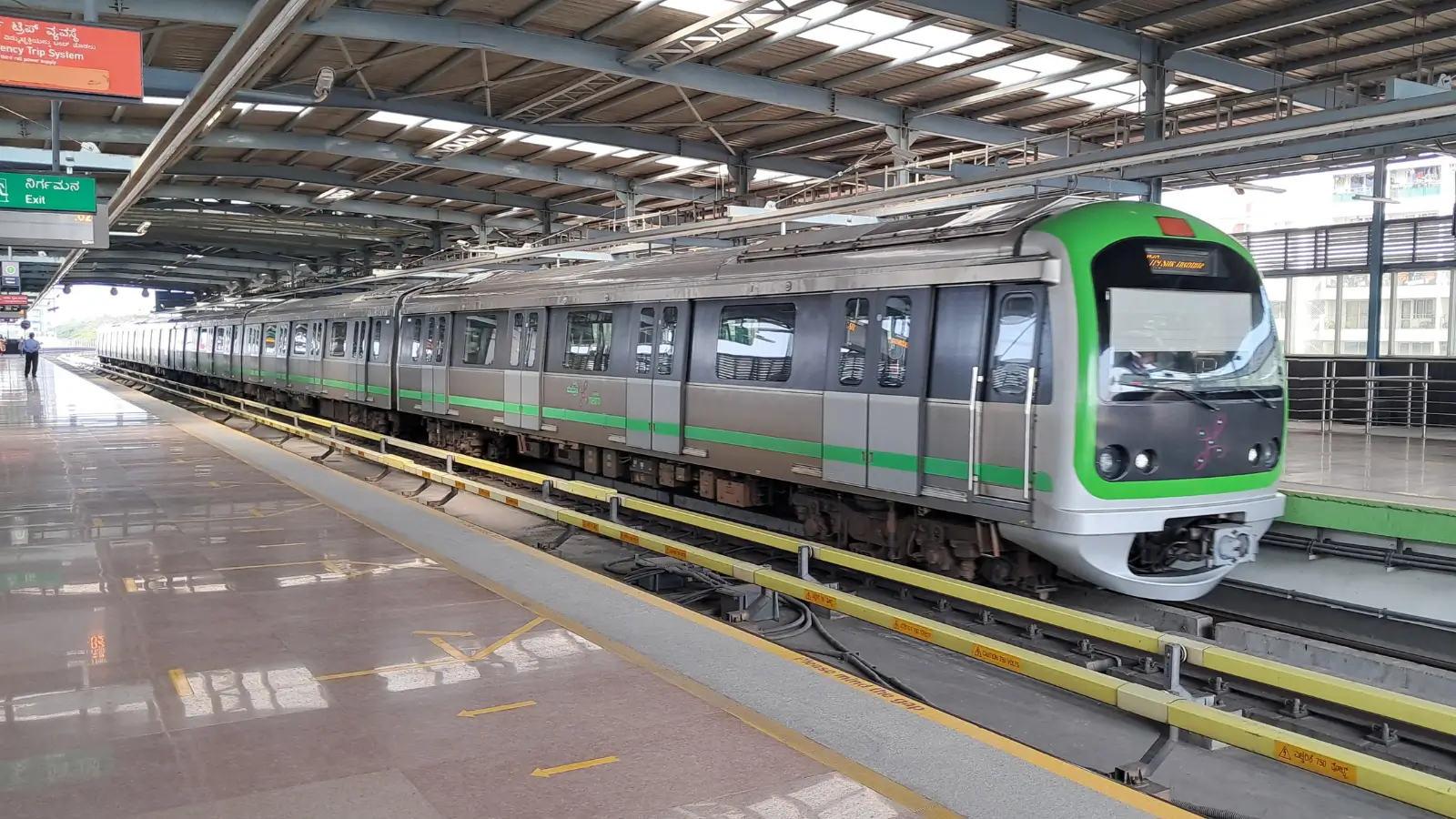
Namma Metro Phase 2B and Beyond — Where the Lines Stand
Bengaluru's metro expansion matters to property buyers because road capacity, not distance, is the binding constraint across most of the city. Two...