Apartments With No Common Walls — What Changes in Daily Life
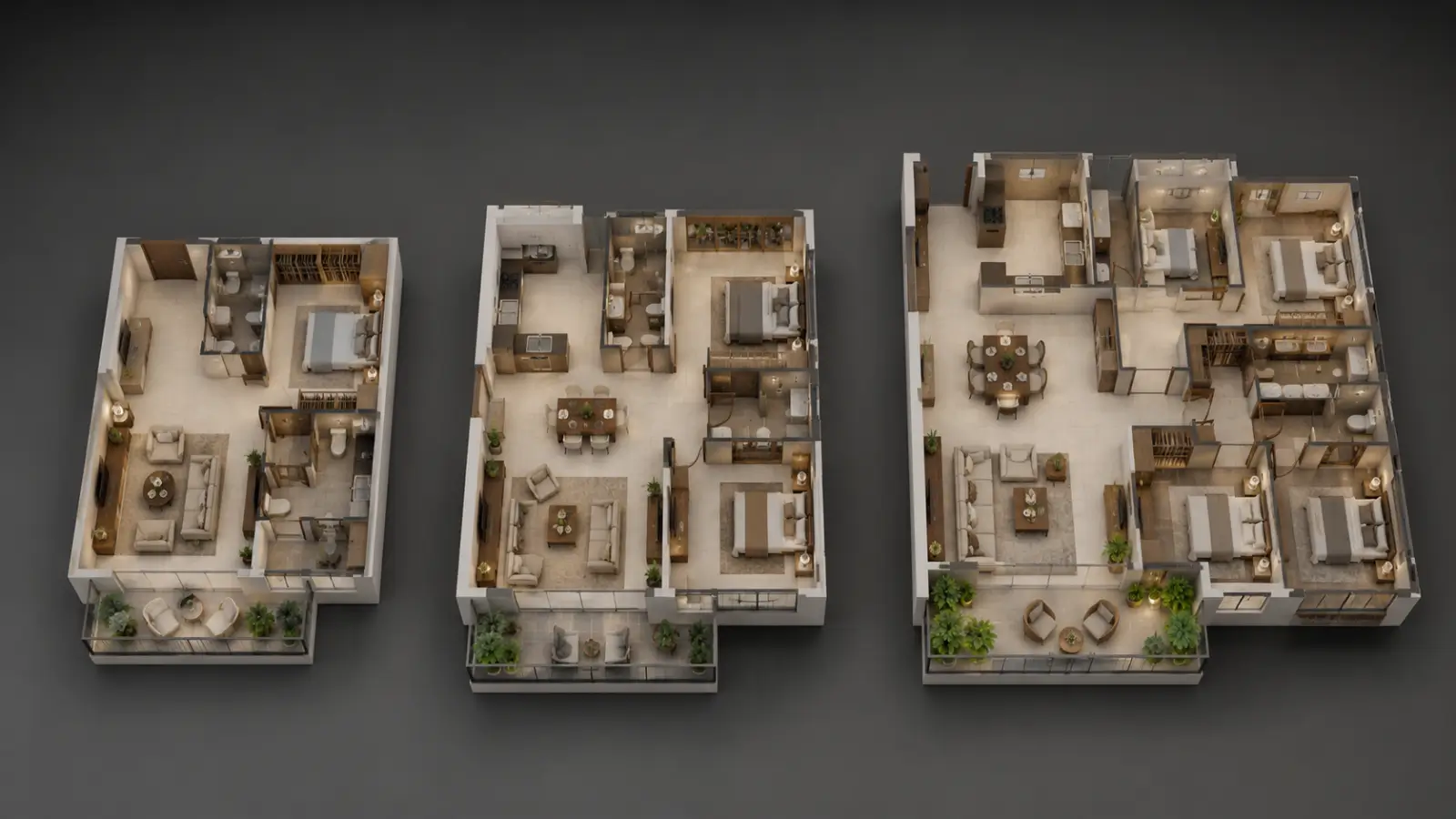
Most apartment buyers discover the significance of a shared wall only after moving in. A neighbour's television at eleven at night, a drill on a...
Most apartment buyers discover the significance of a shared wall only after moving in. A neighbour's television at eleven at night, a drill on a Sunday morning, a conversation that carries through plasterboard — none of it appears in a brochure, and all of it is structural rather than fixable.
At Codename Club Class the problem is designed out rather than mitigated. Each tower places four homes on a floor, and all four occupy corners of the plate. No residence shares a party wall with another. What sits on the other side of a bedroom wall is external air, not a neighbour's living room.
Acoustic separation is the most immediate consequence. Sound transmits through shared construction far more efficiently than through an external wall and an air gap, which is why party-wall noise remains the most common complaint in high-rise living. Removing the shared wall removes the transmission path rather than damping it, and the difference is audible from the first night.
Ventilation is the second effect and arguably the larger one in a Bengaluru summer. Windows on two or three faces allow air to cross a home rather than entering and leaving through the same aspect. Single-aspect apartments, common in slab-planned towers, rely on mechanical assistance to move air at all. Cross-ventilation is what makes an upper floor comfortable in April without running air conditioning continuously.
Daylight follows the same geometry. In a conventional plan, homes in the middle of a floor plate have rooms that never see direct light, which is why so many towers carry internal bathrooms and windowless utility corners. With openings on multiple faces, rooms that would otherwise sit buried receive daylight — a difference that shows up in electricity bills as well as in how a home feels.
Renovation and repair are the quiet fourth benefit. Work on a shared wall involves a neighbour by necessity: their consent, their disturbance, occasionally their disagreement. When every boundary is external, acoustic treatment, plumbing work and fit-out become decisions a household makes alone. It is a small thing until the first time you need to do it.
Related reading: Why Corner Units Are Sought After and Low-Density Living Explained.
Planning a visit? Enquire with our team to book a site walkthrough or request the cost sheet.
FAQs
What does no common walls mean?
Each of the four homes on a tower floor occupies a corner, so no residence shares a party wall with a neighbour.How does it affect noise?
It removes the transmission path rather than damping it. Sound travels far more efficiently through shared construction than through an external wall and air gap.Does it improve ventilation?
Yes. Windows on two or three faces let air cross the home, rather than entering and leaving through a single aspect.Is renovation easier?
Yes. With every boundary external, acoustic treatment, plumbing and fit-out become decisions a household makes without involving a neighbour.
Related Articles

Festive Season Home Buying in Bengaluru — Is It Really a Better Time?
Property enquiry in Bengaluru rises reliably between Navratri and the end of the calendar year. Cultural preference for auspicious timing, annual...

Rules That Shape a Bengaluru Property Purchase
Every residential purchase in Karnataka passes through a regulatory layer that shapes both cost and protection. Understanding which rules apply, and...

KIADB Aerospace Park and the Rise of the Airport Economy
Most Bengaluru housing corridors depend on a single industry, which is precisely what makes them vulnerable. The northern belt is unusual in carrying...
Namma Metro Phase 2B and Beyond — Where the Lines Stand
Bengaluru's metro expansion matters to property buyers because road capacity, not distance, is the binding constraint across most of the city. Two...